
Upper and Little Deschutes Subbasins
Land Conservation:
In the Upper and Little Deschutes Subbasins, Deschutes Land Trust is focused on protecting wetland, riverine, other aquatic habitats, and the habitats that support them to benefit Oregon spotted frog and other aquatic and terrestrial species, and to increase ecosystem climate resilience attributes. Protecting these habitats avoids development and further degradation and reduces direct negative impacts to OSF individuals, supporting maintenance of existing populations and their distribution. Protected lands become available for wetland, riverine, and other aquatic habitat restoration. These lands also become accessible for monitoring to provide key information about OSF populations, and for surveys and removal of invasive bullfrogs that prey on OSF with dire consequences for populations.
In 2022 the Land Trust protected Paulina Creek Preserve, a 1,099-acre preserve that includes more than 3 miles of Paulina Creek. Stream flow and habitat restoration on the preserve will increase stream flow from Paulina Creek into the Little Deschutes and improve wetland habitat at the confluence to benefit OSF and other species.
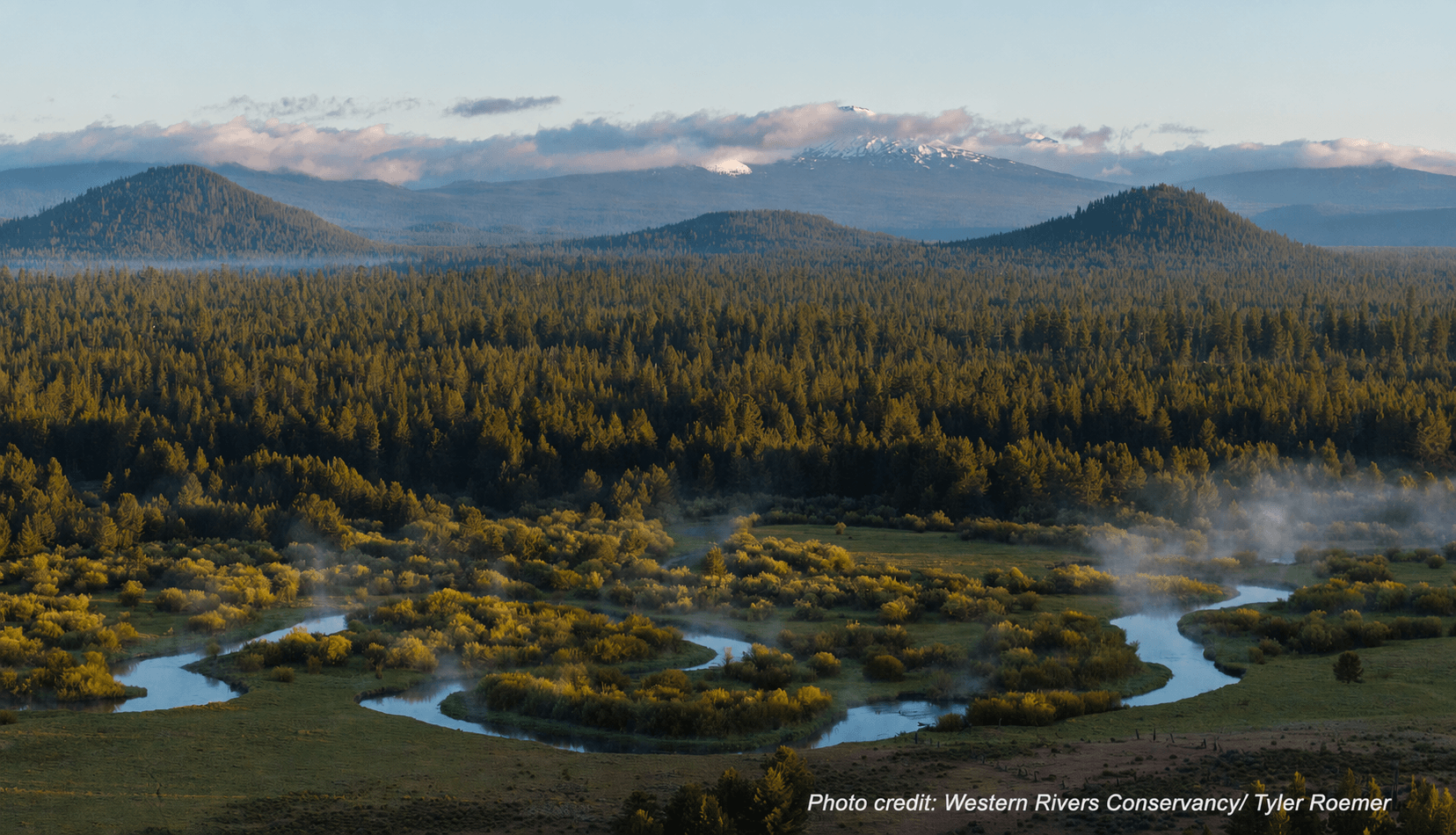
The Paulina Meadows property protected by Western Rivers Conservancy encompasses 674 acres, 2.3 miles of Paulina Creek, and ~2 miles of the Little Deschutes, including the confluence of Paulina Creek and the Little Deschutes River. This preserve and the adjacent downstream Casey Tract parcel owned and managed by BLM span almost 4 miles of OSF critical habitat on the Little Deschutes River; habitat restoration for this reach is currently in design.
Habitat Restoration:
Upper Deschutes Watershed Council and technical partners are designing and implementing aquatic restoration projects to restore wetland, riverine, and other aquatic habitats and vegetation for all Oregon spotted frog life stages. Restoration projects will function at the range of winter and summer flows that will occur as the Deschutes Basin Habitat Conservation Plan is fully implemented over the coming decades. Restoration interventions are being designed to increase both the area of wetland inundation and the amount of time wetlands are inundated, providing essential habitat for all OSF life stages and supporting aquatic connectivity between breeding, summer, and overwintering habitats, and between population sites.
USFS, the Deschutes Partnership, and other restoration partners have implemented large-scale OSF habitat restoration projects on the Upper Little Deschutes River, at Big Marsh, and at Ryan Ranch, and implemented a pilot restoration project in Fall 2025 to restore wetland and aquatic habitat in Dead Slough, located in La Pine State Park.
Upper Deschutes Watershed Council and restoration partners are in the process of designing future wetland habitat restoration projects, including:
- Initiation of restoration design for Western Rivers Conservancy’s Paulina Meadows Preserve and a downstream property owned by BLM, totaling approximately 4 miles of the Little Deschutes River and including the confluence with Paulina Creek;
- Initiation of a feasibility study to develop conceptual restoration opportunities on the mainstem Deschutes River near La Pine State Park and near the confluence with the Fall River
Instream Flow Restoration
The Deschutes River Conservancy, irrigation districts, and other basin partners are designing and implementing projects to conserve water and transfer water rights instream through three actions: piping canals and updating associated infrastructure to modernize irrigation conveyance and delivery; upgrading on-farm infrastructure to increase water application efficiency; and working with willing sellers to acquire water rights and protect those rights instream. Conserving and protecting water instream contributes to increases in winter flows, on a timeline identified in the Deschutes Basin Habitat Conservation Plan, that will increase the amount of wetland habitat inundated to support overwintering and breeding OSF life stages.
As of 2026, 28,000 acre-feet of water have been transferred for instream use in the Upper and Little Deschutes subbasins through irrigation modernization.
Recharging Shallow Groundwater Aquifers:
Shallow groundwater aquifers are an enabling condition necessary to support vertical and lateral hydrologic connectivity of wetlands and sloughs, and thereby habitat quantity and connectivity for OSF. Upper Deschutes Watershed Council and restoration partners seek to conduct feasibility assessments to determine feasibility of projects to recharge shallow groundwater aquifers. Partners will pursue design and implementation of projects deemed feasible.
Promoting Collaborations to Support Oregon Spotted Frog:
Reduction of limiting factors for OSF requires some actions that are outside the expertise, area of practice, existing programs, or purview of the Deschutes Partnership. In these instances, Deschutes Partnership organizations will coordinate to provide technical and funding support to the key partners who are best positioned to implement these actions.
The Deschutes Partnership identified four actions necessary to reduce limiting factors for OSF or to inform or support restoration to do so in which to support basin partners: supporting collaborations to improve water quality; supporting collaborations to control non-native predatory frogs and fish; supporting monitoring to fill OSF population and habitat knowledge gaps; and working with ODFW and tribes to secure Section 6 funding for Strategic Action Plan implementation.
Below are examples of this work that is already underway:
- Bullfrog survey and removal efforts at multiple sites on the Little Deschutes River and off-channel habitats starting in 2018 and ongoing through 2026;
- Annual egg mass surveys by USFWS
- Monitoring to understand baseline species composition and abundance and water quality characteristics of Deschutes and Little Deschutes River mainstem and off-channel and oxbow habitats.
Engaging the Community to Cultivate Support:
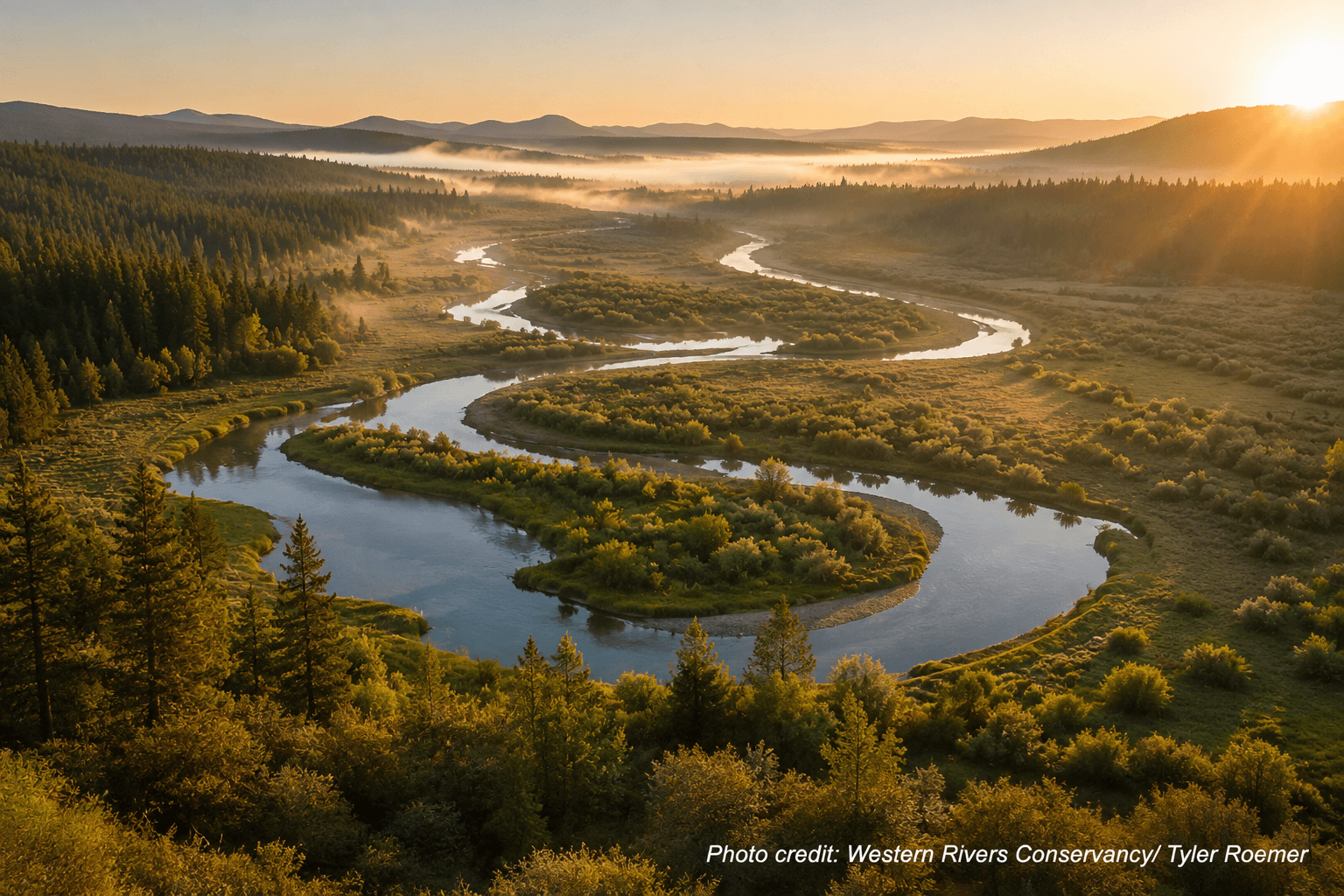
Deschutes Land Trust, Upper Deschutes Watershed Council, and Deschutes River Conservancy will conduct outreach to private landowners to develop conservation easement and fee title purchase projects and to communicate and recruit participation in restoration opportunities. These partners are also engaging students and community members through presentations, tours, workshops and field trips. Visit these partner’s websites to learn more about upcoming opportunities or to seek more information.